See the article in the LA Times here.
Thursday, July 14, 2011
Southern California Proposes Secession
See the article in the LA Times here.
Sunday, July 10, 2011
Failing Parallel Systems: Serbia Can't Afford Kosovo
For many years, these Serbs were under the patronage of Belgrade, collecting checks. That said, there were other checks from other internationals, and from Kosovo. Lets just say, there was money from different people at different times.
This kind of apathy and stagnation trickled down to the kids in the population, as described by my friend from Belgrade working there with the international community (excuse the vagueness, I just don't want to "expose" him). When the system was such that you could collect a check, very few youngsters made an effort to take advantage of opportunities within Kosovo or beyond.
This same friend mentioned before, working with Serbian IDPs in an enclave here, then told me something crazy. He could not get into his office because of very large protests of Serbians. He inquired into what was happening.
Belgrade had cut funding. They could not afford to pay for the six security guards at the post office in this parallel system. With economic troubles, it just was unfeasible to keep the remnants of this protest against Kosovo alive. At a certain point dollars speak louder than nationalism.
To boot, no one really reported this on the news; neither in Kosovo, nor Serbia, nor the English sources. Naturally, there is a strategic interest to not report this. Serbia doesn't want to seem like it is giving up on Kosovo and Kosovo often times doesn't want to admit this parallel system.
Naturally, all of this information is from word of mouth and from spending time with Serbian IDPs in this country. However, this is a critical sign at a critical moment in Kosovo. Serbia can't afford Kosovo anymore. There are bigger fish (like EU membership) to fry. With money leaving from many of the serial donors of days past, Kosovo could be facing a lot of civil unrest from the youth and now, even from the old who received those checks. Time is ticking in Kosovo.
Saturday, July 9, 2011
Congrats South Sudan: Reflections from Kosovo, the 2nd Youngest
Today, at a constitutional law conference designed in part by USAID to consult on amending the articles of the constitution dealing presidential elections, revamping the presidency (possibly making changes from vote by parliament to direct vote), and rethinking presidential powers. Considering 2/3 presidents in Kosovo have violated the constitution, serious problems exist in both the constitutional court and very possibly the constitution itself. Anyways, one person with a kind of melancholy announced, "KOSOVO IS NO LONGER THE YOUNGEST COUNTRY IN THE WORLD."
The room was quiet for a moment. Suddenly constitutional reform was not as much an adventure of a new nation, but a task and duty that had to be readjusted because of failure. Naturally Kosovo is still new born, but the branding of "THE YOUNGEST" is not there. There was a lot of work to do, a lot of laws to change, a lot of rewriting of constitutions, a lot of corruption to kick, and a lot of mandates to meet.
Reflecting on all of these things, I realize that the term "STATE-BUILDING" is perhaps more of a vogue thing in Political Science terms; it sounds nice and when you look from afar, it certainly does seem like "building" a state. It was very attractive for a while until I think many realized, on the ground and not from afar (with the challenges--sometimes failures--in Kosovo, Iraq, Afghanistan, Bosnia, etc.) that you don't go in and "BUILD" anything. I argue the better term is "TRANSITIONING" not so much building. "STATE-BUILDING" seems vain, imperialistic even as a term. Frustrating at times. Perhaps some think it is like building a country in Sid Meiers Civilization. The thought is that "THE PEOPLE" will build this government and state, when in reality power remains in the hands of very few, if not completely foreign individuals. "Building" is one thing. "Getting by" seems more like it. Even just not falling backwards, but moving forwards. With failed missions like the ICO in Kosovo (recently insinuated by many journalists and newspapers as a failed mission), there are a lot of haunting and frustrating things ahead in the future for young states coming out of serious conflict zones.
Thursday, July 7, 2011
Liminality: Kosovo in Stages
A dear friend of mine once describe me as a liminal person: always between one belief, place, status, identity or another one. I would say this may be true, but less because of liminality and more because of my own personal interest in both sides of the same coin.
Perhaps this is what draws me to Kosovo, South Ossetia, Abkhazia, Palestine, Nagorno-Karabagh and many other places that have a liminal status.
The fascinating thing about Kosovo is that I have seen it develop and change in three years now. Someone has joked to me that Kosovo is kind of like Hotel California. You can check in any time you like, but you just can't leave. You can stab it with your steely knives but you just can't kill the beast. Its a kind of place that endlessly has something to change, develop or grow. Because of the general openness of the population here, most things like national politics, information, gossip, networks, and news are in your grasp. Learning about how development, change, transitioning, and growth (or decline) after a high profile war is all at your finger tips here and there is a temptation to continue to watch where it goes.
In any case, I have seen Kosovo on the threshold of many different stages each year. When I first arrived in 2009 for only 4 short days in Kosovo, NATO (KFOR, the Kosovo NATO mission) was just beginning to pull out its street patrols in the capital. I could still see Italian troops in the street, guarding Mother Theresa street. Kosovars, still high from independence were very optimistic; I was, after all, at a youth entrepreneurial conference. Many internationals were very obviously still here. The following year, the first day I touched down in 2010 there was a some several thousand Muslims protesting for the right to wear hijab in school. A stray away from the farm? NATO still patrolled parts like Mitrovica and I witnessed IDPs that still did not have homes. KFOR billboards lined the streets and so did Tony Blair's face!
This year, I had to search for NATO cars and the billboards were not as obvious. Barbed wire still abound, but rusting everywhere, the first thing I see are Muslim protests in the street for the right to mosques. Major mergers in parties had occurred between a very pro-economic reform group and a seemingly anti-internationalist, near anarchist group (that had not been a political party until recently). One politician, recently charged with war crimes, had his party pay for billboards showing their support for him and denouncing any allegation of violent crime. Somehow, things were on a different stage entirely. People were restless. There were recent protests against government corruption as well. That said, the IDPs I had visited, now had houses. Something had developed and grown, though the main street (Mother Theresa) still had not been completed and was the same as it was last year. Kosovo seems to be a place that always changes but always stays the same.
Perhaps there is a constant state of limbo in Kosovo that is of interest to a scholar or journalist. The general openness of all the people here allows you to get a glimpse into everything from pop culture, corruption, islamic fundamentalism, politics, education, and the military. Though now 12 years after the war, Kosovo has a long way to go, but with every year, takes a step towards a new "inbetween." I am fascinated to see its direction and its development and have been honored to watch it.
Saturday, June 11, 2011
8 Proud Hours in Warsaw
After getting off of a rickety Polish airlines flight (LOT)-- (they lost my baggage even before I got on the plane, and just told me so), my suspicions were confirmed: Catholic, elements of post-Soviet architecture and broad avenues, European in the center. Sure, I stereotype.
Wednesday, June 8, 2011
The Rent is Too Damn High


Friday, May 27, 2011
Cigarettes, Pumping Gas, Moronic People: Signs Our Country Is Going Crazy?
Thursday, May 26, 2011
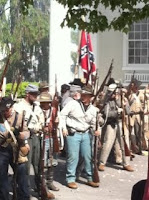
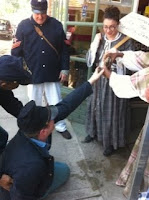
Civil War Reenactments
As one dear friend said, "A sitting African-American President from Illinois (who sounds more and more Lincolnesque) at the same time of Civil War Reenactments. Strange times indeed." And rightly said. At a time in American history where we have powerful blacks, women, minorities, Southerners, Northerners, and many troops on ground abroad fighting very bloody wars, you would think Americans would not feel a need to constantly celebrate the Civil War, but they do.

My sister, inspired by a book, Confederates in the Attic, by Tony Horwitz, decided to do her senior project exploring Civil War Reenactments. First top? Lewisburg, West Virginia. During this particular May weekend, reenactors would carry out a four day "living history" extravaganza.


Sunday, May 22, 2011
No Mitch; Who?
#hopeless
Debt. Debt. DEBT.
My generation is screwed.
What is a liberal girl like myself to do? Obama 2012? c'mon, can't someone give this guy a run for his money?
Saturday, May 14, 2011
Mitch Daniels: The Dinner
I mean, come on think about it:
When I heard of this Mitch Daniels fellow, it was through my friend Max Eden, who started the Students for Daniels movement, to try to get Mitch to run for President in 2012. Ambitious and dedicated as he was, Max (the former long haired hippie who campaigned for Obama) started a national student movement with over 65 chapters at schools around America to get Mitch to run.
I was skeptical. How could a REPUBLICAN ever solve America's problems. But then I researched more about this guy. Some basic stats: Under Mitch, Indiana (what I thought to be quite the poor "backwards" state before), now has a Triple AAA credit rating by Standard and Poor's. He changed a $600 million deficit into a $370 million surplus within a year. He has reduced the state's debt by 40%. He has brought many jobs to the region and many international trade deals. His goal is to make Indiana the best place to open a business in the world. Basically, he wants people to have the choices in their pursuit of happiness.

Thursday, September 9, 2010
Post-Modern, Deconstructionist, Neo-Colonial, Diverse Approaches to War
Wednesday, June 23, 2010
A Woman of ALL Nations (or no nation)
Monday, November 30, 2009
BoTax-- Politicians Get Bored, So Make Creative Tax Names
Wednesday, October 21, 2009
PoliSci: WHY? or rather, Why not?
Sunday, September 27, 2009
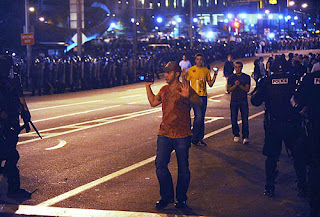
What Happened in My Home? : Police and Protest in Pittsburgh

Friday, August 21, 2009
Living a "Domestic" Life: Life at home for an Ex-pat at heart
Wednesday, July 29, 2009
How Facebook Ushered Me into the World of Diplomacy
Why did I get a Facebook initially? To easily contact old friends. To socialize. To share the party photos from the night before. To take all of those ridiculous quizzes like, "Which State Are You?" or "What type of Kisser are you?" To "find myself" in those years of teenage identity crisis.
Yet in the news, I see people using Facebook to start revolutions.
This is clearly not the Facebook that I, as an American, know. In other parts of the world, Facebook is a political, diplomatic, business and social hub. The politics can get so intense that my sister's Turkish host father will not let his 17 year old use Facebook yet. Revolutions in Iran start as a result of Facebook. China has recently banned Facebook. The power is so huge; it is beyond seeing the drunken picture of your friends the day after a party.
As you well know, recently I visited Kosovo for a JADE Junior Enterprises Conference. I was the only American to attend this conference and I did not meet any other American students in the area (some lovely Canadians...). As a result of this conference, I may venture to say that a decent percentage of Kosovar Youth are now my friends on Facebook—for a country isolated for so long, young people are eager to use their IT and English skills to reach out to the world.
You also know that I recently went to a part of Turkey heavily populated by Kurdish people. As a result of being in Kurdish Turkey and Kosovo within three days of each other, I created a Facebook Photo Album called, “Kurds and Kosovo,” probably just because it had catchy alliteration, but I didn’t think much more into it than that.
Then it began….slowly. The Director of the Ministry of Foreign Affairs had mentioned something in his response to a Facebook message I had sent, inquiring why I put Kurds and Kosovars in the same album. My Turkish friend asked why they were put in the same album.
Call me ignorant of ethnic pride (I’m about as mixed ethnically as a mutt!), but I soon woke up the next morning to comments from a Kosovar detailing—on EVERY Kosovar photo in the album—the difference between Albanians and Kurds, historically, ethnically, linguistically, and geographically. The tone was a little unsettling and after realizing that I had accidentally friended this person without knowing them (in the long line of friend requests from Kosovar students I had met), I deleted all of the comments and removed the culprit from my friends.
The man then sent me an e-mail, saying that as a Yale student, I would never have titled an album “Kurds and Kosovo” without more “profound intentions” and that he took it that I was claiming Kurds and Albanians were of the same ethnic group. He went on to give me a history of how the Albanians were there for a longer period of time and were their own distinct ethnic group. In short, he was offended.
In my manner, I felt guilty. I sent him a very thought out response, explaining to him that, as a Yale Student, my intentions were no more profound than alliteration and the fact that I had been in the two places within each other. We aren't super humans! I changed the name of the album at his request and apologized for the misunderstanding, explaining to him how I would be returning to Kosovo in the future for study and work hopefully because of the good impression I had. I mentioned that, as the ethnic mutt of an American I am, I apparently didn’t fully grasp the ethnic conflicts he had experienced. I did write a note about how I thought he should have messaged me to clarify the situation before posting his comments all over my album though!
He e-mailed back, apologizing whole-heartedly, explaining that after years of Balkans ethnic wars, he had taken me as an enemy of Albania. He explained how grateful he was that I wanted to come back and that he was very sorry for acting on such a strong instinct instead of using his reason. I could see where he was coming from. He explained that he too was a naturalized US citizen (though not the ethnic mutt like me!) and his brother had served in Iraq. He was very grateful to America and had studied at CUNY. He also stated that Yale students "weren't super humans, but close to it! ;)"
I e-mailed him back and thanked him for his honest response. I was amazed at what just happened and I told him. What a soft diplomacy experience we had together! I couldn’t believe it! I asked him if I could tell our story on the blog and he said he would be honored.
The experience helped me realize the tremendous political potential of Facebook. The next day, I told my friend that I solved a soft diplomacy crisis on Facebook. She said, “Why Facebook?” Exactly.
Wake up world! If you thought your Facebook relationship status started heated conflict, imagine what it does in Iran. But also realize how powerful it is in cultural understanding, exchange, and creating even stronger ties after wording mishaps.
My status later stated "Danielle Tomson: has been enlightened on the diplomatic powers of Facebook. Welcome to the rest of the world...." I don’t think I got so many “Likes” from internationals on that status than any other I had before…